Monday, August 10, 2020

#MTBoSBlaugust - Feeling Behind


Y'all - I've already failed at Blaugust and that's okay! :)

My goal, every year, is to blog daily.  But some days that doesn't happen and I have to give myself grace.  Every day that I blog is a victory and one more way for me to reflect about what is going on in this world and in my classroom.  So that failure is a success because I'm working on it!  I'm still blogging!  I'm not letting it get me down.

Right now, we have to honor those successes.  We're in the middle of a pandemic here - hug your pet, celebrate the successes, realize that you are doing the best you can and give yourself grace.

This idea of grace came up this weekend at our first Math Teacher Virtual Collaboration Day (which was freaking amazing... that needs to be a post soon).  Some comments were made about being behind.  And I'll admit I'm behind!

But... what if by being behind, I'm actually ahead???

Seriously.

This past spring, we had a "do no harm" policy with grading and we didn't teach new content, which means that my students won't have had traditional schooling for 5 months.  We are starting our year in a remote learning situation, so by the time I meet my students in-person, it could be 6 or more months since they've been in a traditional brick and mortar school.  People keep lamenting about how far behind our kids will be.

But behind who?

The *entire world* is facing this same situation.  Traditional schooling has been interrupted everywhere.  Heck, we often gripe about how fast paced our curriculum is, how we push our kids to master something before they are ready for it, and we have this perfect opportunity to SLOW DOWN and people are still upset.

Instead of being behind, what if our kids are ahead?  This spring, I had students that mentioned they enjoyed the slower pace, the ability to explore other interests such as art or reading, the time to learn how to cook or sew or just spend time with their family without the constant pressure of being overbooked.  What if they're actually ahead?  Ahead in empathy, ahead in finding their true passions, ahead in finding ways to combat the pace of life?

I get the "feeling behind", as I feel it too.  I report back to school this week and I have done minimal school work.  I've filled many days with webinars and PLCs and exploring tech tools, and soaking up knowledge, but I don't have anything concrete to show for it.  And normally, I would be super stressed right now.

But I'm not stressed at all.  I'm not stressing about my classroom looking perfect.  I'm not stressed about cleaning out the cabinets and organizing the mess I left in March.  I'm okay to look forward and figuring out how to do this thing.

What if, by being behind, I'm actually ahead?  

In the spring, I had opportunties, based on necessity, to explore tech tools that I had always put on the back-burner, in my "someday" pile.  I figured out new ways to give my students feedback.  I worked on non-in-person connections.  I learned so much and walked away from this spring with so many new ideas.  We've been 1-to-1 for years, but you wouldn't have known it if you looked at my pre-March classroom.

Instead of lamenting about being behind, what if I embrace this new opportunity to rethink my classroom?  What if I figure out new and better ways to connect with students?  What if I learn methods to utilize the technology in more efficient and effective ways?  

I don't know what my post-COVID classroom will look like, but I do know that I will take the lessons I've learned and those still to be learned and I will come out a better teacher on the other side.  There will be times of stress and frustration and anguish as we learn to navigate these waters, but together, we WILL get through it.  We'll rely on each other, we'll collaborate to produce even better lessons for our students, we'll give ourselves grace.

And we won't be behind in the long run.  

Saturday, August 8, 2020

#MTBoSBlaugust - WSQ and Google Forms


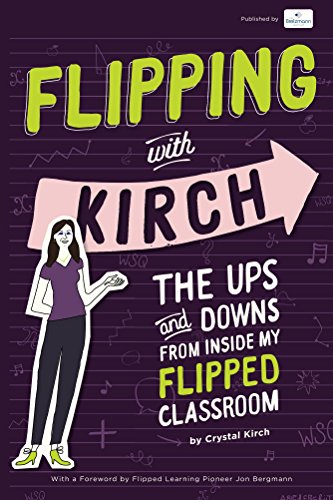
Whew - what a day!  We had our first Math Teacher Collaboration today and it was just amazing!  I learned so much and my mind is struggling to settle down with ideas tonight.  I know there will be some blog posts coming in the next few days, but one of the topics that I've been working on this summer is the idea of the Flipped Classroom.  We did an #EduRead  book chat on Twitter starting in late June over the book Flipping with Kirch, which is about Crystal Kirch's journey to a Flipped Classroom.  If you are interested in learning more about the Flipped Classroom, I highly recommend reading this book as it is a very quick read with a ton of practical tips and hints for implementing this model.  

To be honest, I've thought about the flipped classroom many times over the years, but other issues got in the way - equity of tech access, thoughts and feelings on homework, all of the housekeeping details with accountability, and the list goes on and on.  But in the COVID world that we find ourselves, the Flipped Model seemed to be the best model for balancing at home vs in-person instruction, especially as classrooms and groups of students might be asked to quarantine.

One of the ideas that Crystal shares in the book is the idea of the WSQ (pronounced Whisk), which stands for Watch - Summary - Question.  I love this idea on multiple levels - it allows for accountability, it allows for the teacher to peek into the student thinking, it allows for an element of "notes".  However, in this distance learning world, I've been playing with the idea of having kids keep a paper notebook vs a digital record and how to balance the two.  I know I want them to have a resource that they can use in future classes, a resource to take with them.  But I do want a way to monitor their thinking as well, see the questions they have, read their summaries, etc.  So how do I keep both of these in balance?  I've looked at EdPuzzle for the Watch, which allows for formative questions throughout and I like that idea.  The EdPuzzle analytics allows me to see who has watched the video, how many times, see the answers to their questions, etc.  I've thought about my beloved Desmos.  In the book, Crystal mentions using Google Forms, so I played with that a bit yesterday...

There are parts of Google Forms I like - I love the spreadsheet feature that lets me look at their questions.  If I do a formative question, I can use conditional formating or make it a quiz, but then I vaguely remembering seeing an option to email a copy to yourself.  In the Google Form settings, you can change it to include "Response Receipts", which allows you to email the responses to the person.

I'm thinking this might be a way to bridge the personal copy and the teacher copy... Students can watch the video, answer any formative questions, write their summary, ask the questions, then when they submit, the teacher will see the responses AND the student will have a copy in their email.  Set up a label and now they are all nicely sorted into a GMail folder.

So help me poke holes in this idea... What works?  What doesn't?  Pam suggested having an option to do a photo upload for doing their summary / question on paper and I like that too.  Maybe a branching form?  

Sorry for the lack of organization of this post - it's still a work in progress, my brain is mush after all day on Zoom, and the new Blogger is not playing nicely with the images and formatting, but I'm too tired to fight that battle tonight.. :)


Friday, August 7, 2020

#MTBoSBlaugust - Junior Lesson Planner


August has already been a month and we're only a week into it!  But like so many of us, I need to really work on giving myself grace and being okay with whatever happens, happens. Yesterday was one of those days.  I had all plans of blogging, but as the day went on, it just didn't happen.  

But that's okay!  Maybe I'll hit some inspiration that gives me two blog posts today, but maybe not :)

However, I did finally come up with a potential Lesson Planner format that I think I like.

To be honest, I really liked my planner last year and it was GREAT for in-person classes.  But we aren't starting in person, so I need a slightly different format.  I need a way to track my lesson plans, but also the random Google Meet times, office hours, etc.  I've never really had an "hourly" tracker in the past, so this is a new need for my planner.

Typically, I do my lesson planner in a regular paper sized format of 8.5x11, because I keep track of my lesson plans and gradebook all in one Arc notebook.  However, I'm still trying to figure out the grades, etc, so I decided to try a Junior Lesson Planner format.  This is my first draft and I've never kept my first draft, but I wanted to share for feedback...
It's again printed landscape on 8.5x11 paper so that it can be cut apart for the Junior notebook.  I haven't really tested it out yet, but thought I'd share for anyone that might be looking for a simple lesson planner :)

Click here to get the file:  Junior Lesson Planner
Click here to get the font:  KG Do You Love Me

Wednesday, August 5, 2020

#MTBoSBlaugust - Junior Calendar


It's time to get serious about this planning thing, y'all!

Our district decided on Monday night to start back in distance learning until the numbers decline in our county.  I know it was a really tough decision and honestly, it was a no-win situation as there wasn't a decision would make everyone happy.  However, that means I really need to get myself into gear because teachers report back next week and I've gotten nothing physically done for school! Eeeekkkk!

So today, I decided to start with some planning and organization :)

This summer, I decided to try a Junior Arc Notebook for my summer notebook.  I had purchaed some Junior Arc covers a few years ago at Staples on clearance for 50 cents and had never used them, so there's no time like the present, right? :)  

A few definitions might be needed here:

The Arc System is the discbound notebook system that can be found at Staples.  There are other discbound systems as well, such as the Happy Planner, but they all pretty much work the same.  I LOVE discbound notebooks as they are so simple for inserting and taking out pages.  It works like a 3-ring binder, but with the ease of a spiral notebook.  Best of both worlds! :)

The Junior notebook is for half size pages, so if you take a regular 8.5x11 page in landscape format and cut it in half, you now have a Junior notebook.  

A Summer notebook is an idea I borrowed from my dear friend Rachel and you can read more about it on her blog, but the idea is to have a place to jot down ideas that you run across during the summer.  I've used this idea for the past few summers, but once school started, I often forgot to reference those ideas I had recorded!  So, that moves us on to....

Merging my summer notebook and my teacher planner!


This is still very much a work in progress, but I got my monthly calendars done today!  I'm waiting to do the weekly lesson planning pages until I have a bit more information about what this year will look like, but I wanted to share the monthly pages with you! :)  During the summer, my weekly calendar was more of a way to keep track of appointments, so I'll share that too :)

The dividers are printed on cardstock and there are 6 dividers - Calendar, To Do List, AP Stat, Forensics, Technology, and Other Notes

Behind the other dividers are just half-page note sheets.  For my courses, each page has a title with chapter so that I can file ideas on the appropriate chapter page.

Here are the files if you want them:
Monthly Calendar - will need KG Payphone font


Tuesday, August 4, 2020

#MTBoSBlaugust - Virtual Collaboration


I really love the math teachers of the MTBoS and I'm so glad that I have each of you on my side as we venture into this great unknown of the 2020-2021 school year.

Last night, my district decided to start our year with distance learning and to push back our student start date a bit to allow for teacher collaboration and professional development.

Speaking of professional development, @algebrainiac and I have something to share with you...

*drumroll please*

We are so happy to announce a Math Teacher Virtual Collaboration Day coming up this Saturday on Aug 8!


First off, isn't that just the best graphic?  I do love @algebrainiac's creativity and amazing poster skills! 

We've both noticed people on social media feeling stressed about this year and just needing some good old-fashioned "let's talk it out" time with our math peers, so we are jumping in with both feet and hoping it goes well! :)

This is our first foray into this, so I'm sure there will be some bumps and hurdles as we try to figure out how to manage a large Zoom call and breakout rooms, but our hope is just for some great discussion, more in an EdCamp style than a presentation style PD.  The day will be pretty informal, but just a chance to talk to our colleagues from around the globe and use the collective wisdom to try to get a handle on what this year looks like.

The topics for this day all revolve around the start of school and what this weird remote / hybrid / quick change year might look like, but we are hopeful that we can develop an ongoing virtual PLC that can have discussions about equity, social justice, student engagement, assessment, technology collaborations, best practices, and any other topic that the group might be interested in exploring.

We'd love for you to join us if you are free on Saturday!

Register by clicking here:  https://bit.ly/MathTeachCollab 

Monday, August 3, 2020

#MTBoSBlaugust - Decision Making in a COVID World


Our school board is scheduled to meet this evening and one of the items on the agenda is a discussion of our district's Return to Learn plan.  For the past month, approximately 99.99% of my conversations have revolved around this topic in some form or fashion, as my colleagues and I have watched our state and county numbers grow.

But last night, as I visited with a colleague, I made this comment:

And I realized that's exactly where we are.

In Statistics, one of our topics is about Decision Making and Errors.  Let's look at an example:


When I'm teaching this topic, I talk about getting ready in the mornings and listening to the weather forecast.  Thankfully, this lesson is in the spring, so we are pretty certain that at least one day in the 7-day planner will have a chance of rain! :)

Our Null Hypothesis is the idea that nothing is going to happen - the status quo, if you will.  Our Alternative Hypothesis is that something is going to happen.  Then you see a decision matrix.  At the time we make a decision of whether or not to grab our umbrella, we don't know which "truth" is going to happen.  I have to make a decision based on the data at hand and hopefully I make a good decision.

In an ideal world, we would always make a good decision.  And there are things we can do to help us make good decisions, such as gathering more (good quality) data.  Some things are out of our control, though.  For example, it is easier to make a good decision to take my umbrella if I look outside and see the thunderclouds rolling in because larger differences are easier to detect.

Bad decisions happen too and that's okay.  In our umbrella situation, those bad decisions don't really amount to much.  Maybe I'm carrying around an umbrella I didn't need or maybe I get caught in the rain without an umbrella.  In general, both of those are bummers, but not life altering.

So how does this apply to our school situation right now?  Well, let's look at that same decision matrix...


In this situation, our Null Hypothesis again is that nothing is going to happen, in this case that we'll be okay and there will be no major issues with COVID.  Our Alternative hypothesis is that something is going to happen with regard to COVID.

Our decision here is a bit more difficult, and again, we won't know if we've made a good decision until much, much later.  Just like before, we have to make a decision based on the data we have.

BUT... when making a decision, it's also wise to look at the "What if's..."

What if we are wrong?  Which decision has consequences we can live with if that's the part of the decision matrix we end up with?

Let's look at a Type I Error.  This happens when we Reject the Null Hypothesis and we were wrong.  In this case, it means that a district decides to do some sort of alternate schedule (like remote learning), but they were wrong and it wasn't necessary because the COVID issue wouldn't have really been that big of an issue.  

On the flip side is a Type II Error.  This happens when we Fail to Reject the Null Hypothesis and we were wrong.  In this case, a district would decide to proceed with life as normal and open schools to in-person learning, but they were wrong and the COVID issue creates spread (and potential severe illness).

Both of these errors have consequences, some minor, some major.  But when making this kind of decision, you have to decide which error is the one that has the consequences that you can live with?

We see this same decision making when schools decide to have a snow day.  Do we have school and risk the chance of a student or staff member having an accident?  Do we call off school and risk the chance of the snow having minimal impact or melting off quickly?  

One thing to note is that the decision about how to start school this Fall has a lot more complexity than just about the spread of COVID.  There are issues with food insecurity, issues with child neglect and abuse, issues with social-emotional learning, issues with equity, issues with childcare, and so many more.  This is not a an easy decision to make.  I truly feel for our leadership teams as they try to navigate these waters.  There are so many facets to this decision and honestly, unlike the umbrella example, there's not a single good decision that will fix it all.  We just have to make the best decision we can with the data available and try our best to address the other issues that arise.

I don't envy the people making the decisions at all.  I'm quite glad that I'm not responsible for making a decision like the one facing our superintendents right now.  But I pray daily for wisdom in making that decision and peace for whatever decision is made.

Sunday, August 2, 2020

#MTBoSBlaugust - Thinking About Notebooks


If you've known me for any length of time, you probably know that I love organization and one of my favorite parts of my class are the student notebooks.  Every year, I have kids that that overwhelmingly tell me that they find the notebook so helpful as they prepare for the AP Exam and even have kids email me a few years later to tell me about asking their parents to mail the notebooks to college for their college stat classes. ðŸ¥°

I first learned about Interactive Notebooks (INBs) at TMC12, when Megan presented about them and we all quickly fell in love.  I jumped in with both feet in the Fall of 2012 and have never looked back...

Until now.

COVID-19 is causing quite a disruption in my classroom procedures, y'all!  Assuming we are back in person, student desks will be moved into rows, as separated from each other as possible, so no more groups of 4 students working together.  There will be no shared supplies, so there goes my table buckets with scissors and tape and glue sticks and my table folders to pass out papers...

So, what do I do?  I turn to the Twitters of course! :)


Before I figure out what to do, I needed to think about what my big goals were for their notebooks.  I mean, other than organization, what's the reason for them?  And honestly, the biggest thing is to have an easy reference for the key ideas for the course.  I try to organize the notebook so that the left side has the daily notes and on the right side is the daily problem set.  The notes are often in a foldable or some other guided format, mainly because stat questions are really lengthy overall.  

So with that in mind, here's what I am thinking so far...
  • If we start in person - For AP Stat, create a semester long booklet with the essential questions / reading guides to go with our textbook.  This ensures they have the big ideas for each section in an easy to find format.  If we have to pivot to remote learning for either short or long term, they already have a guide for continuing our course.
  • If we start remotely - If I don't have a chance to see them at all, then I want an easy to follow notes format that can be used consistently with a variety of lesson formats - Desmos / videos / lecture.  I also want it to be something that they can easily replicate on notebook paper or print out a blank template if they choose.  I want to make sure it has the elements of the WSQ (Watch, Summarize, Question) format from Flipping with Kirch, plus an area for referencing their textbook and the daily lesson objective or essential question.  Right now, here's the format I'm playing with:


    I settled on this generic format because in the spring, I did a digital notebook on Google slides and while I liked it overall, it really needed to be printed for full impact and I cannot reasonably ask my students to do a lot of printing if we are in an extended remote situation.  I've tried out the format above with a sample lesson and it worked okay, but it's still in beta testing. ðŸ™‚

How are you handling the notebook situation for Fall 2020?  I've been lurking on a digital NB group on FaceBook and I've already decided that I don't have the time or patience to do something too fancy, but I'm eager to hear your ideas!