Sunday, August 5, 2018

Classroom Procedures and Other Stuff


This month, I'm participating in a blog challenge called Blaugust.  To see the list of participating blogs, click on the logo above. I would encourage to you please cheer on our participants with either a tweet or a comment on their blog during this month. It can be hard to blog on a daily (or even regular) schedule! :)  If you would like to join the blogging challenge, you can still sign-up anytime!


While browsing Twitter this morning, I ran across this tweet:


Dear Erikka,

I don't know you, but instead of replying to you in 20 tweets or more, I figured it would be easier to write a blog post! :) 

Procedures:
If you have read any of the first year teacher books such as Wong, Fred Jones, etc, you know that procedures top the list of things to do.  I am definitely one that likes order vs chaos, so I try to train my students early in how I like my classroom. :)  I am not one that likes surprises in general, so there is an element of predictability in how I organize my classroom.  One of my favorites is my warm-up procedure.  I really like there to be a consistency in warmups, so we have things like Multiple Choice Monday, Throwback Thursday, FRAPPY Friday, etc.  This year, I'll be adding on some procedures to warm-up time that relate to homework, but those plans aren't finalized yet :)  Pretty much everything in my classroom has a procedure related to it in some way. 

Grades:
Our school expects that teachers of the same course will use the same grading breakdown, so each course I teach is slightly different, but in general, it comes out to assessments (quizzes / tests) are 75%, assignments (classwork, etc) is 10%, and semester exam is 15%.  In general, I don't have a lot of grades in the assignments category, typically just review assignments like Throwback Thursday or notebook checks.  I don't grade everything, but I am expected to have at least one grade per week, so I kind of balance my paperwork. With that said, I do believe a lot more in feedback than I do in grading, so it's pretty common for me to write feedback on warm-ups or exit tickets as time allows.

Rules:
I don't really have a ton of rules in my classroom, other than Respect - for yourself, for your classmates, for the teacher, for our school.  Whenever we introduce a new routine, we do talk about how to behave, etc, but most everything comes down to respect.

Paperwork:
So.Many.Papers! :)  I use INBs, so I use a LOT of paper with foldables, etc.  Years ago, I would pass out papers a table at a time during the class period and it took so much time!  Then, I read an idea from Sam Shah about Table Folders...


Other than the first week of school, my students stay in table groups for at least 2-3 weeks before switching.  The table folders allow me to organize handouts for the day, collect papers, and pass back papers easily.  In the example above, this was during the first few weeks of school when they were still using their name tents to help me learn names.  On the left are the notes for the day as well as an exit ticket / quick check from the day before.  On the right is a problem set.  This does take a bit of time to get used to, but there are now 4 different teachers in my hallway using this method and they all love it.  My students love it too because everything is in their folder.  When a student is absent, I just paperclip their papers together and leave it in the folder, so I rarely have to answer "What did we do yesterday??" :)

One added benefit to the folders is the grading.  There is just something daunting about a stack of 30+ papers but a few papers at a time in a folder seems to go so much quicker!  There are some things I grade or comment on immediately and put back into the folders, such as Multiple Choice Mondays or Quick Checks and a stack of 8 folders is a lot less intimidating to me and it helps me see the progress a lot more than with a stack of papers.  Of course, quizzes and tests aren't in the folders, but most daily work is handled that way. :)  If it's something I can't get to right away, I just pull the papers and paperclip them in folder order so that I can put them back quickly. :)

One other note with the folders - I color code my classes, so 1st hour is Red all the way down to 6th hour is Purple (following ROY G BiV of course!).  I buy the paper pocket folders each year when they are on the 10 cent sale and at the end of the year, I recycle them because they are pretty beat up from daily use.  I've thought about going to the poly folders so I can reuse them, but I haven't tried it yet because the poly folders seem more flimsy overall and I have a tendency to toss the folders on the tables as I quickly go across the room to the doorway for passing periods. :)


Whew - that got a bit longer than I expected! :)   Sorry about that! :)


Saturday, August 4, 2018

Organizing Rich Tasks


This month, I'm participating in a blog challenge called Blaugust.  To see the list of participating blogs, click on the logo above. I would encourage to you please cheer on our participants with either a tweet or a comment on their blog during this month. It can be hard to blog on a daily (or even regular) schedule! :)  If you would like to join the blogging challenge, you can still sign-up anytime!


Confession time...

For years, I have had a goal of integrating rich tasks into my classroom and this year is no exception.

But... (here's the confession)... I didn't.  Or at least I didn't do it well.  There are a lot of excuses as to why, but that's not what this post is about. :)

For the first time in at least 5 years, I have the same preps as I did last year (YAY!), so I am determined that this is the year that I am going to meet my "Rich Tasks" goal.

But it's hard.  It is difficult to find good problems, to find time to sit down and sort through problems, to play with the 5 practices on how to integrate those problems.  So I had to find a way to get through some of those excuses.  I needed a way to organize the problems I did find so that when it came time to USE the problems, I could do so without additional stress.

Here's my plan:

I created a powerpoint for my Geometry book and started by making a screen for each chapter with a list of the individual lessons within each chapter.  Then, as I had time, I have populated it with problems that I've found on Open Middle, Exeter Math, Park School Math, NCTM Calendar, etc.  (I should note that I've put the source credit / link / page / number in the slide notes so that I will have access to the info but I can easily copy/paste the slides over to my working lesson PPT.)

One of the struggles I've had is what constitutes a rich task?  Mainly I've been looking for a couple of criteria:

  • Accessibility - We hear about this a lot with "low floor" tasks and "multiple entry points", but I am looking for problems that all students should be able to start somewhere
  • Multiple Methods - Learning is messy and part of what I love about math is that different strategies can all work well.  I want something that can create some rich dialogue on "how did you think through this problem?"
  • Interesting - Now granted, I chose problems that were interesting to me.. questions that made me think, ponder, wonder, and puzzle.  And just because I found it rich doesn't mean that others would and that's okay.  
One thing I've learned about myself over the years is that if I want something to change (and be a LASTING change), I need to figure out a way to make it sustainable when the craziness of the year happens and to make it user-friendly for me so that I have fewer excuses to ignore it.

Would love to hear how you organize tasks and/or your favorite places to find tasks! :)

Friday, August 3, 2018

#GradeSmarter - Unit Plans


This month, I'm participating in a blog challenge called Blaugust.  To see the list of participating blogs, click on the logo above. I would encourage to you please cheer on our participants with either a tweet or a comment on their blog during this month. It can be hard to blog on a daily (or even regular) schedule! :)  If you would like to join the blogging challenge, you can still sign-up anytime!


Happy Friday and welcome to Day 3 of Blaugust!

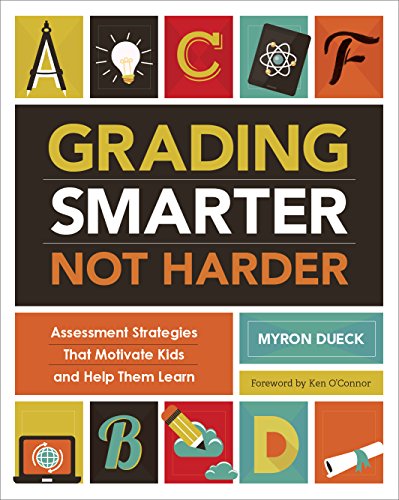
I've already written a couple of posts based on this book, specifically geared toward homework, but Ch 3 was another one that hit me pretty hard.

In the introductory paragraph of Ch 3 comes this gem:
"Maybe it's just human nature - we crave some element of predictability and find comfort in knowing a little about the future."

As I pondered this quote, I realized how true it is.  I *hate* surprises and I like having a plan in place, so why shouldn't kids be the same?  I have kids that are very busy - jobs, athletics, multiple AP classes, etc, so why shouldn't I do all that I can do to help them know where we are going so they can maximize their schedule?

Years ago, I provided my students a monthly calendar that listed everything - lessons, homework, assessments, etc.  Over the years, I got away from that and started posting the weekly calendar in the classroom as well as on Canvas, our Learning Management System, but in general, kids still seemed shocked when assessment time came around... "Wait - what??? We have a Quiz today??" 

So this chapter on Unit Plans seemed like perfect timing.  We are switching to new books and as a result, I have spent part of my summer looking at the various structures I had in place and how to make them better and one that I definitely wanted to work on was the Chapter Info Sheet.

Here's the old info sheet:


The info sheet was the chapter divider for each chapter and it listed the learning targets, the vocabulary, and was supposed to act as a reading guide for the chapter.  Except that my students really didn't read the book that much and I can't really blame them - even though our textbook was extremely readable, there wasn't much of a need to read given our in-class activities and the INB.  As a result, this info sheet ended up as something we put in every chapter, but it wasn't really used to help move learning forward.

And then I read "Grading Smarter"...

I already knew I wanted to change the Info Sheet, but now I wanted it to be useful, I wanted it to have a roadmap of where we were going.  So, here's the result:

The new info sheet template:


This new info sheet will have the daily calendar on the front, which is somewhat tentative, but I try to stick pretty close to my pacing guide.  Assessment dates will be provided as will daily assignments. That way, if a student is absent, they know where to find out what we did and hopefully if they are going to be absent on an assessment, can make plans to take care of that early!  On the inside will be the learning targets for each section and a vocabulary rating chart.  One thing I think I will like is that this info sheet will literally be a guide to us throughout the chapter.  As we finish a section, they will flip here to do their self-assessment of the learning targets, a quick reflection question (like maybe 3 new things you learned, etc), and a vocab rating.  At the end of the chapter, we will do the same thing with the Chapter Summary on the front (like a 3-2-1 or some other summarization strategy).

I'm really excited that I finally have this template in place because it's been bugging me for weeks that I wanted something else but just didn't know what to do!

So what do you think?  Poke holes in my plan... Can you break it and help me make it better?


Thursday, August 2, 2018

#BecomingMath - Thoughts on Collaboration


This month, I'm participating in a blog challenge called Blaugust.  To see the list of participating blogs, click on the logo above. I would encourage to you please cheer on our participants with either a tweet or a comment on their blog during this month. It can be hard to blog on a daily (or even regular) schedule! :)  If you would like to join the blogging challenge, you can still sign-up anytime!


Tonight is our final book chat on Tracy Zager's Becoming the Math Teacher You Wish You'd Had.

When I first picked up this book, I'll admit that I was a bit overwhelmed by its size.  My typical edu-reads are not 350+ pages long, so its taken me a bit longer than normal to read this one.  In general, the book is focused toward elementary teachers, but there are a lot of take-aways for secondary teachers as well.  I've had a couple of chapters really blow me away and a few others that I skimmed more than read because it just wasn't as engaging to me.  But, overall, this book will be on my recommendation list and will be one that I revisit over the years to try another strategy in my quest to be a better teacher.

We intentionally set the reading schedule so that we would finish the book around the time that most people are returning to school and I'm so glad we did because in the last chapters, I found some really great takeaways that have caused me to do quite a bit of pondering.

Chapter 12 is titled "Mathematicians Work Together and Alone".  This was an important chapter for me because my classroom is set up in tables but I don't always leverage it well.  The physical layout is due to a couple of reasons - I believe in the power of collaboration and tables allows for easier movement around the classroom, especially when its packed with 30+ adult bodies and backpacks.

However, there are some limitations to this layout and one that has frustrated me over the years - students start to rely too much on the power of the group and end up with an inaccurate reading of how well they have personally grasped the content.

My biggest take-aways from the chapter are:

  • "Teach students how, why, and whether to interact."
    Wow... So simple, yet so difficult.  Because I teach high school, I often assume that students have some knowledge of how to work with their peers, but if that were true, my frustrations would be taken care of, right?  I really like the addition of "whether" here, because there's a time and a place for groups vs independent work.  In my classroom, I need to work on better defining my expectations for individual work and to help my students develop a better sense of when collaboration is valuable versus over-reliance on others.
  • "Students need to learn how to ask for what they need from one another and to be what they need for each other."
    I've never really thought about this, but it makes so much sense.  As an adult, I am comfortable saying to my spouse or to a coworker, "Hey, can I talk this through with you to get some feedback?"  Or even online, we do this all the time via our Twitter PLN, but I need to explicitly teach my students how to monitor and do "self-care" for themselves academically.  Some suggestions given in the book are to teach your students that it's okay to say things like "Hang on a minute - I need to wrap my head around this on my own first." or "I'm stuck... are you at a place where we can discuss this problem?"  I really love this, but do need to work on how to develop this culture in my classroom.
  • "Students should spend most of their math time gathered around rich problems, flowing naturally among thoughtful dialogue, periods of quiet thinking, and bursts of active chatter as they make sense of mathematics."
    If someone were to ask me to describe my ideal dream classroom environment, I could not have phrased it any better than Zager did in the quote above.  However, while it may be my ideal, it's not where my classroom actually is and I'm not quite sure how to get it there - YET.  I have some ideas to implement this year to move me closer to that ideal, which I'll be blogging about this month.  I have some of the elements in place - whiteboarding, groups, etc, but I need to work on implementing rich problems and developing guidelines for productive discussions (thankfully, I have a plan for both, just need to implement!)
  • "New ideas only influence students' work if students resume working after being exposed to the new idea.  Otherwise, those fleeting thoughts won't penetrate."
    Honestly, this is probably one of the most profound statements I've read in a very long time.  It applies to everything - discussions, feedback, practice - everything!  I even notice it in my own professional life - I often read something or engage in a twitter conversation about a great idea, but if I don't stop to process it and intentionally *implement* the idea, then no matter how great of an idea, it will be lost in the netherworld forever.  I need to be very intentional about this - I have to give students time to ACT on feedback, to use and internalize and apply what they have learned.

Wednesday, August 1, 2018

Blank Slate

August has arrived!!  And with the first day of August comes...


This month, I'm participating in a blog challenge called Blaugust. My hubby actually started this a few years ago within his blog-o-sphere and I stole it a few years ago to help motivate myself to blog during one of the roughest months of a teacher's year!

To see the list of participating blogs, click on the logo above. I would encourage to you please cheer on our participants with either a tweet or a comment on their blog during this month. It can be hard to blog on a daily (or even regular) schedule! :)  If you would like to join the blogging challenge, you can still sign-up anytime!


Since August has arrived, it was finally time to go to my classroom and try to figure out some details.  Here's what it looked like when I arrived:


While it can be overwhelming to think about all that needs to be done, one of my favorite things about teaching is that each year is a new start - a blank slate.  I often sit in my empty classroom and just think and dream about the new year and based on my unscientific twitter poll - I'm not alone! :)

One thing that amazes me every year is how the pulse of the room changes over the course of one day or even a few hours - it's like the room comes back to life, knowing that in a short while, there will be the hustle and bustle of children laughing and learning and chatting with their peers.

After a few hours of cleaning and rearranging desks, my room was feeling more "normal".  It's still not completely back to where it was, but that's a chore for next week!  I only worked for a few hours today, so other than cleaning, my biggest accomplishment was my classroom door:


(Sidenote:  cleaning desks has to be my least favorite chore of back to school!  Why, oh why, do kids feel so determined to put gum under their desks?  I mean, seriously!!  And while it's not quite as bad as gum, I also hate when kiddos put tape on their desks!  #teacherlife)


Tuesday, July 31, 2018

Welcome to #MTBoSBlaugust 2018


Holy moly, the last day of July is upon us, which means that Blaugust starts TOMORROW!

What is Blaugust?
Blaugust is a blogging challenge for the month of August.  We'd love to have you join in the fun - just click here to sign-up!

How often do I have to blog?
That's up to you! :)  Each person sets their own Blaugust goal - maybe you want to try blogging every day, or twice a week, or ten times throughout the month, or whatever!

What if I don't want to (or don't have a) blog?  Can I still participate?
Sure!  One of the hardest parts of blogging is the feeling of "shouting into the wind".  If you don't have time to blog, but still want to join in, it would be great if you could commit to reading and / or commenting on the participating blogs, or tweeting out a link to a post that resonates with you.  Encouragement and positive feedback can go a long way to helping the participants meet their personal blogging goals!

I don't know what to write about!?!?!
Don't worry - here's a list of over 50 prompts to help you out! :)


Now... on to this year's bloggers:

2018 #MTBoSBlaugust Participants:
Kim Charlton @logicalpoetry - Logical Poetry
@sgiekAHS - Rise Over Run
Anna Blinstein, @ablinstein - Borscht With Anna
Andy Shores / @abshores - Unknown Quantity
Krystal Evans / @krystalarevans - The Evans Equation
Amy Zimmer/@zimmerdiamonds - Ms Z. Teaches in Mathland
@ilanacyna - Teaching to the nth Degree
@ClaireVerti - I DeClaire
@pamjwilson - The radical rational
Cori Colby (@mrschz) - I like to party and by party, I mean teach math
Julie Morgan @fractionfanatic - Fractionfanatic
@geonz - resource room blog
@mathbythmt - Math by the Mountain
Seth Risinger @MrRisinger - Distinctly Non-Normal
@alexandraotto - Ottograph
@elhistuck - Unnamed
Kirsten / @klsilverman - Numbers
@jab8115 - Mathkins
Kelsey Holley, @kelzholley - Math With Ms. Holley
@MarshaFosh73 - Math-termind
@MathEasyAsPi - Math.Easy.As.Pi
Stacy Eyton. @MrsMathEyton - Eyton Sum Pi
@benjamin_leis - Math off the grid
@DamionBeth - Unrestricted Domain
Teri Ryan @geometrywiz - Journey of a Mathematics Educator
@Caitlyn_Gironda - Give Me a Sine
KellyMSpoon - Flipping Statistics
@letsplaymath Denise Gaskins - Let's Play Math
George Carganilla , @CarganillaRHS - Out Of My Comfort Zone
@chatelet0211 - Hazeleyedmathnut
@daniellereycer - Teaching and Growing
anne_mayre - La Vie en violet
@abel_jennifer - Mathsational
@megandubee - Megan Dubee
@MrKitMath - Those who teach, do more
Jonathan Schoolcraft/@jschool0218 - Algebracraft: The Tales of a High School Math Teacher
@stewy915 - Just one conjecture away
Matt Coaty @mcoaty - Educational Aspirations
@davidwees - The Reflective Educator
jennalaib - Embrace the Challenge
Misscalcul8 - Misscalcul8
@michaeltang09 - Michael Tang - Medium
John O'Malley IV @jomalleyiv - Functions Are Fun
@mrsjtweetsmath - Mrs Js Classroom
Marissa G @viemath - La Vie Mathématique
@JennSWhite - MathihgOutLoud
Heather Bolur @hbolur7 - Cupcakes and Pi
@anneagost - 53 Degree Shift
Jlwilliams314 - Mrs. Williams is "Off on a Tangent!"
@aspellk - Wandering Asymptotes
Julie Reulbach @jreulbach - I Speak Math
Bear St. Michael @bearstmichael - Questions About Math
@mathykeithc - mathykeithc
Denise Russo @bluebeagle - Stranger in a Strange Land
Allison Yokeley - Algebra, Graphs & Laughs
Megan Heine @MeganHeine - Peace Love Math
Steve Dull (@thedullguy) - Tweaking For No Reason
Amy Gruen @sqrt_1 - Square Root of Negative One Teach Math
@mary_dooms - Curiouser and Curiouser
Lucy @lsquared76 - Dividing by Zero
@rlawsum - Mathy blog
Nina Tandle / @misstandle - Tandle Tangents
Jenn Vadnais @rilesblue - Communicating Mathematically
@mythematics - Mythematics
Carl Oliver carloliwitter - Carl's teaching blog
@jacrichardson - High Heels and No. 2 Pencils
Jfinneyfrock - Designatedderiver
mathplusmusic - Math Plus Music
@askmrsmartinez - A Call To Action: Be a Math Unicorn
Kaycee Dammann, @kayceedammann - A Tech Coach Teaches Math
helfrederick - one more problem
Beth Ferguson - Algebra's Friend
MrLeNadj - Math Coolisms
@johnsonmath - The Conic Card Lady's New Adventure
Angela Censoplano Holmes - Life is a Classroom, A teacher's journey
Amber Brewer @srabrewer - Edu-Coach-ion
@mrswilliamyu - Math Coach on Demand
Michelle Rinehart (@HowWeTeach) - How We Teach
mathinct678 - mathinct678
Jessica (@algebrainiac1) - Algebrainiac - Are you pondering what I'm pondering?
sedulaney - Go to Sleep. Study. Mathinate.
Jonathan Schoolcraft @jschool0218 - Algebracraft: The Tales of a High School Math Teacher


Wednesday, July 25, 2018

All about #MTBoSBlaugust 2018!

August is looming, which means it's time again for the #MTBoSBlaugust blogging challenge!


The Rules:
The rules are pretty simple... all you need to do is blog!  :)

Maybe your goal is to blog every day, or other day, or weekly, or to write at least 10 posts this month... whatever it is, you can do it!  My personal goal will be to blog daily, but I'll be honest - that's been my goal MANY times and I have YET to achieve that goal!  But it's okay - blogging once is better than not blogging at all, right? :)

If you'd like to join in, please take a minute to sign-up so I can link to your site as a #MTBoSBlaugust participant and cheer you on!


The Prompts:
Note:  These prompts are NOT required, it's just a brainstorming list to help you on those days when you don't know what else to write about! :)


  • How I teach / do ______ (INB, VNPS, VRG, topic of choice)
  • My Favorite “rich problem / task”
  • Sharing an idea I learned at a PD event this past year
  • Something new I plan to try this year…
  • How I use ____(tech app of choice) in my classroom
  • Share a lesson that uses tech (Desmos AB, Geogebra, applets, etc)
  • Write a post for Sam Shah’s Virtual Conference of Mathematical Flavors (click to learn more!)
  • Answer the prompts from Julie R’s #TMC18 keynote:  I am a great teacher because… I am a teacher leader because… I want to grow as a #teacherleader this year by… 
  • Share your #MTBoS Photo Challenge photos (#MathPhoto18)
  • Go on a “math walk” - take a photo to share with us… What do you notice? What do you wonder?  How could you use this photo in your classroom
  • How do you handle homework / daily practice?
  • Self-Care…  how to make it a priority?
  • Math Makeover - Take a traditional question/problem to solve and make it better.
  • My favorite go-to ____(Online resource, book, blog).  Share an idea of how you have utilized this source.
  • Something I struggle with as a teacher/in the classroom. 
  • How I used something unexpected in my classroom to… 
  • #made4math - Create something you can use this semester, such as a tarsia puzzle, question stack, game, card sort, etc.  (Or share one you have previously created)
  • #myoneword - What is one word that you can use to focus your energies this year?
  • What is your favorite quote?  How can you share/use it in your classroom?
  • How do you handle Parent Communication?  What has been successful for you?
  • Tell us about a favorite activity/lesson that makes you jump for joy when you get to use it.
  • Shoutouts!  Give a shout-out to a former teacher, a colleague, or someone in your school or community who is a difference maker.
  • Time Capsule - revisit an old post and reflect. If you are new to blogging - find a post on this day from the past on someone else's blog-read, share, reflect.
  • What’s a practice you keep doing year after year? Either something that works great or something that maybe needs examining. Why do you keep doing it?
  • What’s the one thing in your school year you’re most looking forward to? A lesson, a unit, a field trip, a school tradition
  • Fav [math][ed] book read and take aways for 2018-2019 (and beyond?)
  • How do you support struggling students?  What intervention strategies have you used?
  • Observe yourself!  Record your lesson using your phone in your pocket and use it to reflect
  • A peek into my classroom - show us your classroom or describe a typical day / hour
  • A Day in the LIfe  (#DITL)
  • Letter to my first-year teacher self…
  • Tell us about your first day plans!
  • How do you develop a positive classroom culture?
  • What would you like to Start doing this school year?  What would you like to Stop doing? What would you like to Continue doing?
  • What are your best organizational tips?
  • My classroom “must-haves” are...
  • Be the Change… what will you do this year to impact the culture of your school and/or classroom?
  • What is your focus / theme / mantra for the year and why?  (Quote / Saying / Song?)
  • What are your favorite formative assessment strategies?
  • What is your Professional Goal for the year?  Your Personal Goal?
  • What are your biggest classroom pet-peeves and how do you do handle them?
  • #Read3 - Share 3 blogs (or blog posts or tweets) that impacted you
  • Tell us about you!  (20 facts or ABCs?)
  • What are your New School Year Goals or Resolutions?
  • What’s your “One Good Thing” for today?
  • #MyFavFriday - Tell us about your favorite moments of the week!
  • What do you do on parent night / open house?
  • What’s the toughest challenge you face as a teacher today?
  • #teach180 - Share a photo from your classroom and tell us about it
  • What I did this summer….
  • What are your favorite practice structures?  (Ex: Question Stacks, Sum Em Up, etc)
  • How do you review for a unit or semester test?  Any good review games or strategies?
  • What are your top "teacher hacks" that make your life easier?