Saturday, August 11, 2018

Working on Organization..


This month, I'm participating in a blog challenge called Blaugust.  To see the list of participating blogs, click on the logo above. I would encourage to you please cheer on our participants with either a tweet or a comment on their blog during this month. It can be hard to blog on a daily (or even regular) schedule! :)  If you would like to join the blogging challenge, you can still sign-up anytime!


School starts MONDAY!  EEKKK... And I have SO much left to do, my office is a wreck, papers are scattered everywhere and I'm freaking out because in general, I'm a fairly organized person!

But this summer, I have been a bit off my game.  I have at least 5 notebooks, all with random starts and stops and to-do lists.

And with school starting on Monday - the madness had to stop!!  I need all of my stuff in a limited number of places so that I can find what I need to find. :)

To add to the craziness, we adopted new textbooks this year.  I'm not much of a textbook teacher, but there's a certain amount that I am expected to use them and to pace with the other teachers.  So far, I have been using a spiral bound notebook to record my planning thoughts, but I wanted something more tailored to my needs, so I created a Course Planning Guide...

Note... both Geometry and AP Stat have the same format :)

As I'm planning each section, I needed a place to record the Learning Targets, the Vocabulary, and my Notes.  The back page is also just a lined page for additional notes.  The notes section will kind of act as my "paper brain" to jot down ideas, resources, fav tweet references, website references, to-do lists, reminders, reflections for next year, etc.

If you would like the file - click here

How do you go about planning when given a new course or new book?

Thursday, August 9, 2018

To Call or Not To Call?


This month, I'm participating in a blog challenge called Blaugust.  To see the list of participating blogs, click on the logo above. I would encourage to you please cheer on our participants with either a tweet or a comment on their blog during this month. It can be hard to blog on a daily (or even regular) schedule! :)  If you would like to join the blogging challenge, you can still sign-up anytime!


One of the Blaugust prompts is:
  • Something I struggle with as a teacher/in the classroom. 

And to be honest, there are a lot of things that I struggle with in the classroom - things that my students and my admin would never notice, but things that bother me personally because they don't flow quite as well as I would like them to.  One of these topics came up today as I reading "Making Number Talks Matter" because it presents a conflicting set of messages to me and I don't know which way to go!

So, my teacher dilemma of the day is:  Cold Call or Not?

I don't know when I first learned of Cold Calling, but I know most recently, it's a technique that I heard about via podcasts and a book by Doug Lemov (Teach Like a Champion) and also used by many other edu-gurus.  Some teachers suggest using popsicle sticks or index cards to decide who to call on, others just call on students haphazardly.  When I hear the reasons for Cold Calling, I agree and I want to use it in my classroom, but then I read something like this quote from Number Talks:
"...researchers in psychology have found that stress interferes with performance in mathematics problem-solving tasks by reducing the working memory capacity (Beilock 2011). Knowing that they must be ready to speak at any time, whether they want to or not, can interfere with students' learning."
And all of a sudden, I'm at an impasse.

Why is this an issue for me right now?

Well, because last year, one of my Geometry classes was silent.  Like painfully, awkwardly silent.  And they were okay with that.  And I wasn't.  In their groups, they would talk quietly.  Before and after class, they would be social with me.  But once that bell rang and class began, crickets.  One student even wrote on an exit ticket that "I wish my teacher knew that I often know the answer but don't want to speak out loud because our class is so quiet."  :( :( :(

I tried Cold-Calling, but it felt more like a "gotcha" than a way to build accountability and engagement, so instead I let it fall to the wayside and did nothing.  I was at a total loss.  So, I was determined to do some research this summer on various techniques to address this lack of participation and I thought I had a plan.  But then Making Number Talks Matter had to come in with that quoted research....

And I get it.  In fact, that's part of the reason I had never used Cold Calling up to this point in my career.  I had not read that specific research, but as a very introverted person, I know it to be true for me personally.  When I know I might have to share out, especially to a large group, the anxiety builds and builds until I'm literally frozen.  When I'm at a workshop, I am willing to share out within my group, but if you ask me to share out to the entire group, that's a big nope!  (Note: this isn't limited to a workshop... I'm the same way when I sing at church - I shake for probably 10 minutes after I finish singing and cannot focus on the sermon... but I can speak to hundreds of teenagers in a large group setting with no issues.)

So anyway... how do I balance this in my classroom?  How do I create the safe space necessarily to implement something like Cold Calling while keeping down the anxiety levels in my students?

From the end of that paragraph in Number Talks:  "Our job is to make Number Talks [our classrooms?] a safe place for students to try out new ideas and to share their thinking when they are ready to do so."

How do you get them ready?  How do you build that safe space?

I would greatly appreciate any ideas :)


Wednesday, August 8, 2018

My 5 Favorite Formative Assessment Strategies


This month, I'm participating in a blog challenge called Blaugust.  To see the list of participating blogs, click on the logo above. I would encourage to you please cheer on our participants with either a tweet or a comment on their blog during this month. It can be hard to blog on a daily (or even regular) schedule! :)  If you would like to join the blogging challenge, you can still sign-up anytime!


Toward the end of the 2017-18 school year, I received an email from one of our secondary curriculum coordinators asking if I would be willing to lead a breakout session in August for our new teachers.  When I received that email in May, I readily agreed because I'm often in my room working in August anyway.  Of course, as the date drew closer, I had a few moments of regret of giving up morning patio time, but it worked out in the end! :)

As I was finalizing my presentation, I sent out the following tweet:

And I got a TON of great responses!  (Thank you!)

I had a few people ask if I would share my presentation, so you will find it below.  Best part is that I could feel the power of the MTBoS as I presented (plus I was able to put in a plug for Twitter as a PLN as I shared @kklaster's tweet and bonus pictures from Julie and Pam's classrooms! :) 


Monday, August 6, 2018

How Things Change...


This month, I'm participating in a blog challenge called Blaugust.  To see the list of participating blogs, click on the logo above. I would encourage to you please cheer on our participants with either a tweet or a comment on their blog during this month. It can be hard to blog on a daily (or even regular) schedule! :)  If you would like to join the blogging challenge, you can still sign-up anytime!


I've been working the past few days on a PD session that I am giving tomorrow to our district's new teachers on Formative Assessment and I finally have it done and handouts printed... which of course means that I will find 20 new ideas between now and midnight that I should have used instead :)

While I was working this morning, I was also involved in a Twitter discussion with @katherine_ruse about various activities for our AP Stat classes and it made me think about how things in my classroom have changed over the years.

One example that immediately came to mind is an activity I blogged about in 2014 - using Quiz Quiz Trade for Sampling Methods:
The original file was meant to be printed 2-sided and used as a flashcard style activity where students would be roaming about the classroom and "quizzing" each other.

But once I used it, I wasn't crazy about it, so Iteration #2 was a Card Sort...
The card sort used the same cards as QQT, but did not have the answers on the back.  Groups were given a mat of sampling methods and they were to read each card and sort the problem based on the method.  Overall, I liked this better and I have used this the past couple of years, but I did have two frustrations... 1) It was hard for me to gauge student understanding in the moment and 2) every student reads and processes at slightly different speeds, so some kids were zooming along and leaving others in the dust...

So this year, to try to fix the issues with the Card Sort, I'm going to try Hold Ups...
Hold Ups is an idea that I learned about from Total Participation Techniques by Himmele and Himmele.  I have used them in Geometry quite a bit, but for Iteration #3 of the Sampling Methods activity, each group will get a set of 7 cards with the 7 sampling methods listed.  As a class, I will present a problem and give think time.  Then as a group, they will discuss which method they think it is and on my cue, they will hold up the card they think it might be - AND - be prepared to defend their answer.

I'm hopeful that Iteration #3 will be *the one* but if not, that's okay, there's always more learning and growing to be done! :)


Sunday, August 5, 2018

Classroom Procedures and Other Stuff


This month, I'm participating in a blog challenge called Blaugust.  To see the list of participating blogs, click on the logo above. I would encourage to you please cheer on our participants with either a tweet or a comment on their blog during this month. It can be hard to blog on a daily (or even regular) schedule! :)  If you would like to join the blogging challenge, you can still sign-up anytime!


While browsing Twitter this morning, I ran across this tweet:


Dear Erikka,

I don't know you, but instead of replying to you in 20 tweets or more, I figured it would be easier to write a blog post! :) 

Procedures:
If you have read any of the first year teacher books such as Wong, Fred Jones, etc, you know that procedures top the list of things to do.  I am definitely one that likes order vs chaos, so I try to train my students early in how I like my classroom. :)  I am not one that likes surprises in general, so there is an element of predictability in how I organize my classroom.  One of my favorites is my warm-up procedure.  I really like there to be a consistency in warmups, so we have things like Multiple Choice Monday, Throwback Thursday, FRAPPY Friday, etc.  This year, I'll be adding on some procedures to warm-up time that relate to homework, but those plans aren't finalized yet :)  Pretty much everything in my classroom has a procedure related to it in some way. 

Grades:
Our school expects that teachers of the same course will use the same grading breakdown, so each course I teach is slightly different, but in general, it comes out to assessments (quizzes / tests) are 75%, assignments (classwork, etc) is 10%, and semester exam is 15%.  In general, I don't have a lot of grades in the assignments category, typically just review assignments like Throwback Thursday or notebook checks.  I don't grade everything, but I am expected to have at least one grade per week, so I kind of balance my paperwork. With that said, I do believe a lot more in feedback than I do in grading, so it's pretty common for me to write feedback on warm-ups or exit tickets as time allows.

Rules:
I don't really have a ton of rules in my classroom, other than Respect - for yourself, for your classmates, for the teacher, for our school.  Whenever we introduce a new routine, we do talk about how to behave, etc, but most everything comes down to respect.

Paperwork:
So.Many.Papers! :)  I use INBs, so I use a LOT of paper with foldables, etc.  Years ago, I would pass out papers a table at a time during the class period and it took so much time!  Then, I read an idea from Sam Shah about Table Folders...


Other than the first week of school, my students stay in table groups for at least 2-3 weeks before switching.  The table folders allow me to organize handouts for the day, collect papers, and pass back papers easily.  In the example above, this was during the first few weeks of school when they were still using their name tents to help me learn names.  On the left are the notes for the day as well as an exit ticket / quick check from the day before.  On the right is a problem set.  This does take a bit of time to get used to, but there are now 4 different teachers in my hallway using this method and they all love it.  My students love it too because everything is in their folder.  When a student is absent, I just paperclip their papers together and leave it in the folder, so I rarely have to answer "What did we do yesterday??" :)

One added benefit to the folders is the grading.  There is just something daunting about a stack of 30+ papers but a few papers at a time in a folder seems to go so much quicker!  There are some things I grade or comment on immediately and put back into the folders, such as Multiple Choice Mondays or Quick Checks and a stack of 8 folders is a lot less intimidating to me and it helps me see the progress a lot more than with a stack of papers.  Of course, quizzes and tests aren't in the folders, but most daily work is handled that way. :)  If it's something I can't get to right away, I just pull the papers and paperclip them in folder order so that I can put them back quickly. :)

One other note with the folders - I color code my classes, so 1st hour is Red all the way down to 6th hour is Purple (following ROY G BiV of course!).  I buy the paper pocket folders each year when they are on the 10 cent sale and at the end of the year, I recycle them because they are pretty beat up from daily use.  I've thought about going to the poly folders so I can reuse them, but I haven't tried it yet because the poly folders seem more flimsy overall and I have a tendency to toss the folders on the tables as I quickly go across the room to the doorway for passing periods. :)


Whew - that got a bit longer than I expected! :)   Sorry about that! :)


Saturday, August 4, 2018

Organizing Rich Tasks


This month, I'm participating in a blog challenge called Blaugust.  To see the list of participating blogs, click on the logo above. I would encourage to you please cheer on our participants with either a tweet or a comment on their blog during this month. It can be hard to blog on a daily (or even regular) schedule! :)  If you would like to join the blogging challenge, you can still sign-up anytime!


Confession time...

For years, I have had a goal of integrating rich tasks into my classroom and this year is no exception.

But... (here's the confession)... I didn't.  Or at least I didn't do it well.  There are a lot of excuses as to why, but that's not what this post is about. :)

For the first time in at least 5 years, I have the same preps as I did last year (YAY!), so I am determined that this is the year that I am going to meet my "Rich Tasks" goal.

But it's hard.  It is difficult to find good problems, to find time to sit down and sort through problems, to play with the 5 practices on how to integrate those problems.  So I had to find a way to get through some of those excuses.  I needed a way to organize the problems I did find so that when it came time to USE the problems, I could do so without additional stress.

Here's my plan:

I created a powerpoint for my Geometry book and started by making a screen for each chapter with a list of the individual lessons within each chapter.  Then, as I had time, I have populated it with problems that I've found on Open Middle, Exeter Math, Park School Math, NCTM Calendar, etc.  (I should note that I've put the source credit / link / page / number in the slide notes so that I will have access to the info but I can easily copy/paste the slides over to my working lesson PPT.)

One of the struggles I've had is what constitutes a rich task?  Mainly I've been looking for a couple of criteria:

  • Accessibility - We hear about this a lot with "low floor" tasks and "multiple entry points", but I am looking for problems that all students should be able to start somewhere
  • Multiple Methods - Learning is messy and part of what I love about math is that different strategies can all work well.  I want something that can create some rich dialogue on "how did you think through this problem?"
  • Interesting - Now granted, I chose problems that were interesting to me.. questions that made me think, ponder, wonder, and puzzle.  And just because I found it rich doesn't mean that others would and that's okay.  
One thing I've learned about myself over the years is that if I want something to change (and be a LASTING change), I need to figure out a way to make it sustainable when the craziness of the year happens and to make it user-friendly for me so that I have fewer excuses to ignore it.

Would love to hear how you organize tasks and/or your favorite places to find tasks! :)

Friday, August 3, 2018

#GradeSmarter - Unit Plans


This month, I'm participating in a blog challenge called Blaugust.  To see the list of participating blogs, click on the logo above. I would encourage to you please cheer on our participants with either a tweet or a comment on their blog during this month. It can be hard to blog on a daily (or even regular) schedule! :)  If you would like to join the blogging challenge, you can still sign-up anytime!


Happy Friday and welcome to Day 3 of Blaugust!

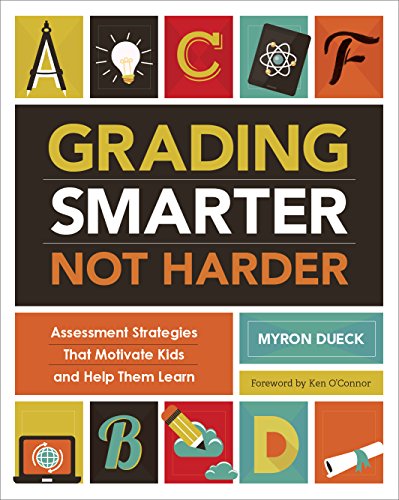
I've already written a couple of posts based on this book, specifically geared toward homework, but Ch 3 was another one that hit me pretty hard.

In the introductory paragraph of Ch 3 comes this gem:
"Maybe it's just human nature - we crave some element of predictability and find comfort in knowing a little about the future."

As I pondered this quote, I realized how true it is.  I *hate* surprises and I like having a plan in place, so why shouldn't kids be the same?  I have kids that are very busy - jobs, athletics, multiple AP classes, etc, so why shouldn't I do all that I can do to help them know where we are going so they can maximize their schedule?

Years ago, I provided my students a monthly calendar that listed everything - lessons, homework, assessments, etc.  Over the years, I got away from that and started posting the weekly calendar in the classroom as well as on Canvas, our Learning Management System, but in general, kids still seemed shocked when assessment time came around... "Wait - what??? We have a Quiz today??" 

So this chapter on Unit Plans seemed like perfect timing.  We are switching to new books and as a result, I have spent part of my summer looking at the various structures I had in place and how to make them better and one that I definitely wanted to work on was the Chapter Info Sheet.

Here's the old info sheet:


The info sheet was the chapter divider for each chapter and it listed the learning targets, the vocabulary, and was supposed to act as a reading guide for the chapter.  Except that my students really didn't read the book that much and I can't really blame them - even though our textbook was extremely readable, there wasn't much of a need to read given our in-class activities and the INB.  As a result, this info sheet ended up as something we put in every chapter, but it wasn't really used to help move learning forward.

And then I read "Grading Smarter"...

I already knew I wanted to change the Info Sheet, but now I wanted it to be useful, I wanted it to have a roadmap of where we were going.  So, here's the result:

The new info sheet template:


This new info sheet will have the daily calendar on the front, which is somewhat tentative, but I try to stick pretty close to my pacing guide.  Assessment dates will be provided as will daily assignments. That way, if a student is absent, they know where to find out what we did and hopefully if they are going to be absent on an assessment, can make plans to take care of that early!  On the inside will be the learning targets for each section and a vocabulary rating chart.  One thing I think I will like is that this info sheet will literally be a guide to us throughout the chapter.  As we finish a section, they will flip here to do their self-assessment of the learning targets, a quick reflection question (like maybe 3 new things you learned, etc), and a vocab rating.  At the end of the chapter, we will do the same thing with the Chapter Summary on the front (like a 3-2-1 or some other summarization strategy).

I'm really excited that I finally have this template in place because it's been bugging me for weeks that I wanted something else but just didn't know what to do!

So what do you think?  Poke holes in my plan... Can you break it and help me make it better?